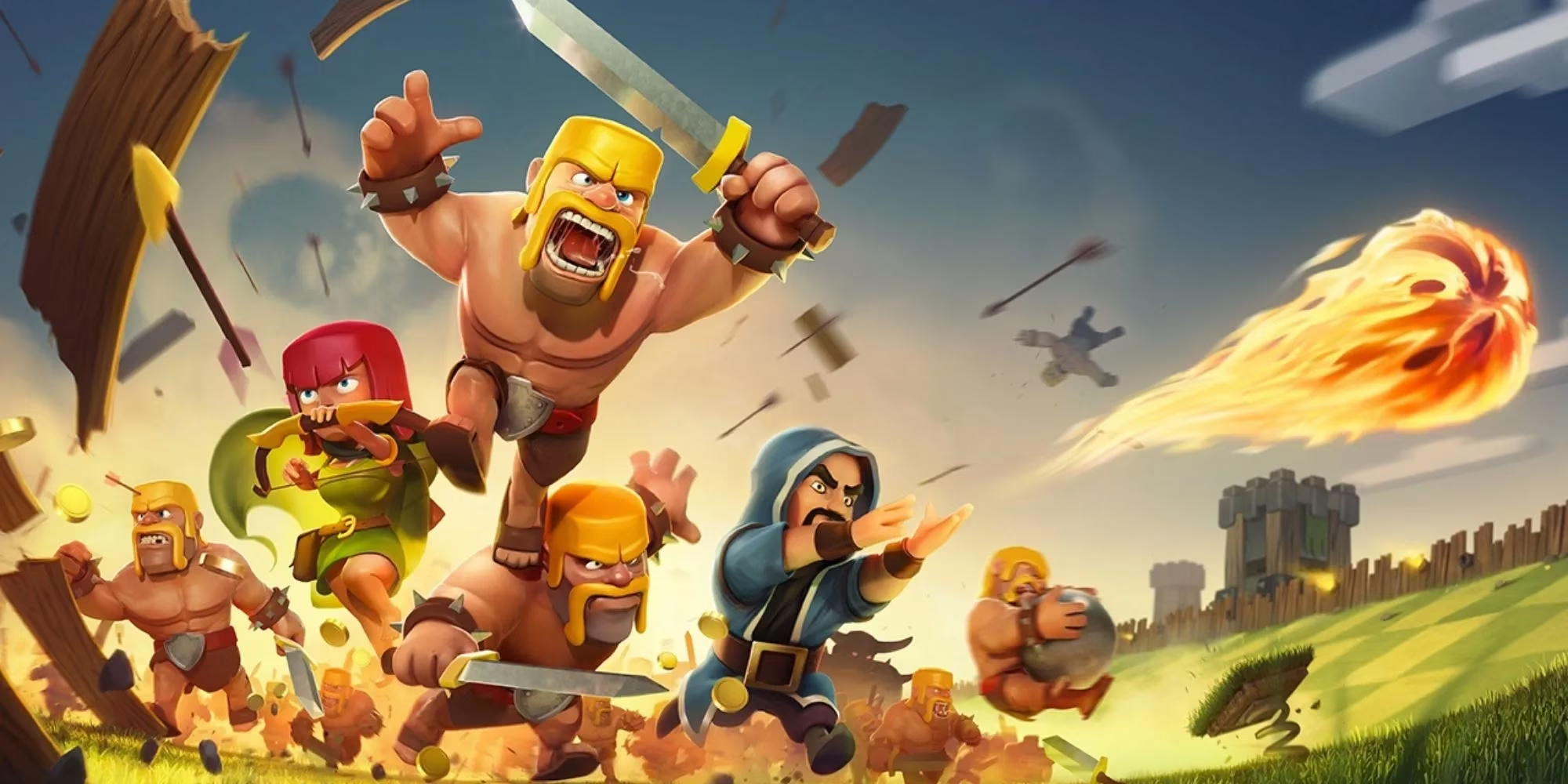
For over a decade, the armies of Clash of Clans have marched to the same silent drum—a sea of identical Barbarians, a chorus line of Archers, all following orders without a single, unique name to their credit. They were tools, units, resources to be spent. But in 2026, that all changed. Supercell, the Finnish mastermind behind the global phenomenon, decided it was time for these soldiers to find their voices. Enter Books of Clash, an eight-volume graphic novel series that does something revolutionary: it looks past the health bars and damage stats and asks, "Who are these guys, really?" It’s like finally getting to meet the neighbors after years of just waving from across the street.
Gene Luen Yang, the acclaimed graphic novelist tasked with this ambitious project, put it perfectly. "The game is made up of these groups of troops, and every group, they all look the same," he explained. "When you're playing, you're looking at this world from a God's eye view. You don't see the characters as individuals. You see them as groups." For years, players have been master strategists, viewing the battlefield as a chessboard. Books of Clash flips the script entirely, inviting everyone—from the seasoned Clan leader to someone who’s never placed a single cannon—down from the clouds to walk in the muddy boots of the troops themselves. It’s a shift from player to reader, from commander to comrade.
Meet Terry: The Hog Rider With a Heart
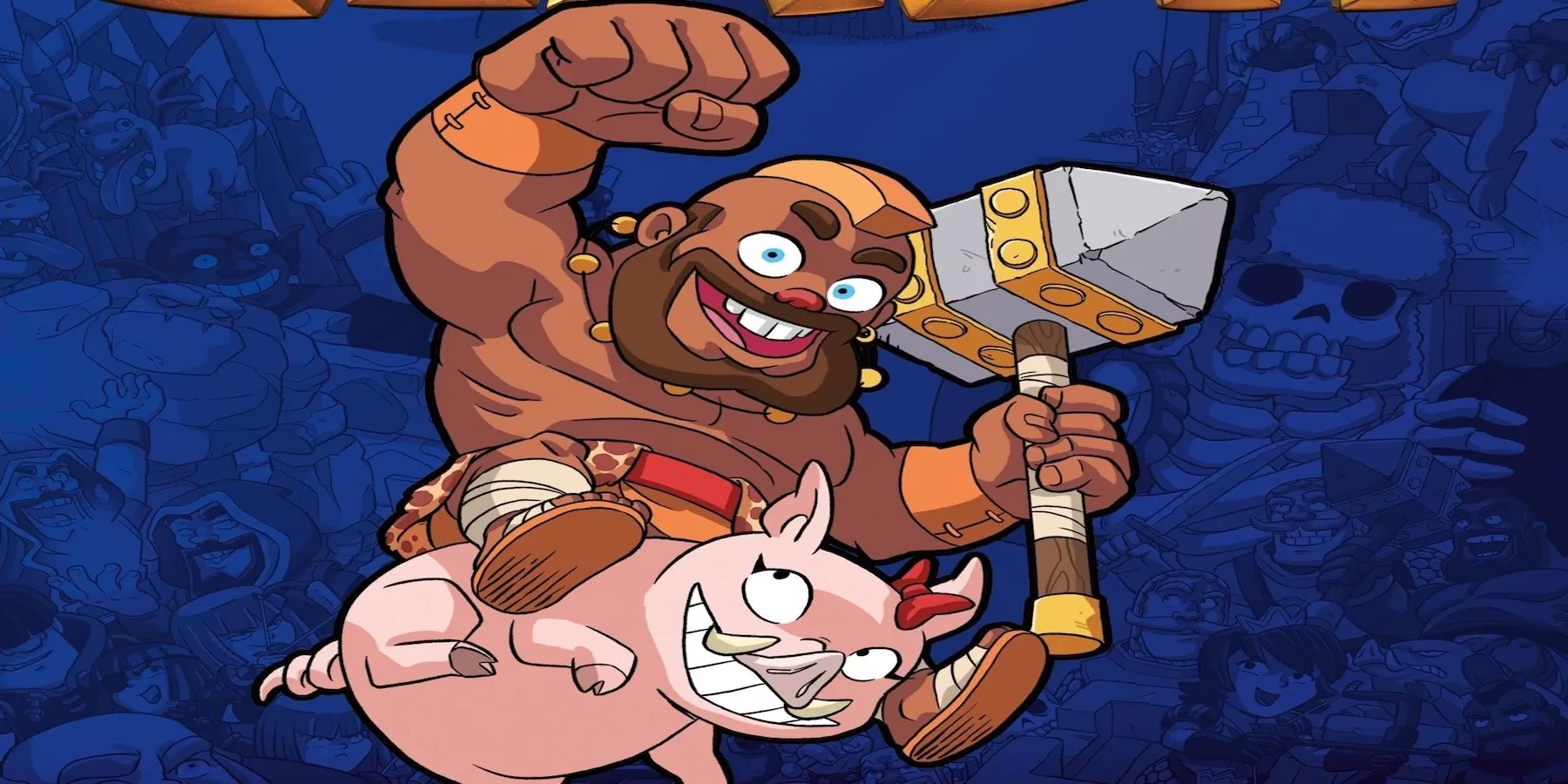
The first volume introduces us to our unlikely hero: Terrodicus, or Terry for short, a member of the Hog Riders. And let’s be real, who hasn’t sent a pack of these spiky-haired daredevils on a suicidal run against a hidden Giant Bomb? But Terry isn't just a unit with a speed stat. He's a guy with dreams, anxieties, and a best friend who happens to be a hog named Pim Pim. Their relationship is the soul of the story. Yang describes Pim Pim as Terry's "Jiminy Cricket," a constant companion who offers grunts, snorts, and unwavering loyalty that speaks louder than words. Through their dialogue, we get a window into their world—a world where the next raid isn't just about loot, but about survival and brotherhood.
A Story of Sibling Rivalry in a World of War
At its core, this first book isn't about epic siege battles (though there's plenty of that). It's about a much more relatable conflict: living in someone's shadow. Terry’s older brother, Rokkus, isn't just another Hog Rider; he's the leader of the Hog Riders. The pressure, the comparisons, the feeling of never measuring up—it’s all there, set against the chaotic backdrop of goblin raids and wizard towers. Yang drew inspiration from his own children, who used to bicker constantly until they found common ground building bases and launching attacks together in Clash of Clans. "I've made a sibling relationship the center of this first story," Yang shared. "It's the story of how [Terry] feels like he's always in his older brother's shadow and how he gets out of that shadow eventually." It’s a powerful reminder that even in a fantasy world of magic and mayhem, the most compelling battles are often the internal ones.
The Bridge Builder: Yang's Personal Touch
Yang is no stranger to crafting stories about identity and belonging. From the groundbreaking American Born Chinese to his work on Avatar: The Last Airbender and Superman, he has a knack for building bridges between worlds. He sees a direct line from his own experiences to the world of Clash. "For me, going from home to school did feel like going from one community to another," he reflected. "That act of going from one spot to the other felt like a bridge. Like I had to be a bridge just to survive. That idea informs everything I do, including Clash of Clans." This perspective is what makes Books of Clash so special. It’s not just a merch tie-in; it’s a thoughtful expansion that treats the source material with genuine respect and curiosity. Writing for a video game franchise was a dream project for Yang, seeing it as "a way of bringing more readers into comics."
More Than Just a Book: A New Gateway
So, who is this for? Well, everyone, honestly.
-
For the Veteran Chief: It’s a fresh lens on a world you’ve spent years mastering. That Barbarian you’ve trained a thousand times? Maybe he has a name, a family, a reason for swinging that sword. It adds a rich layer of lore that makes logging in for the next Clan War feel different.
-
For the Casual Fan: Maybe you played years ago. This is the perfect, low-commitment way to revisit the Clash universe with a brand-new, story-driven perspective. No upgrades to wait for, just a good book.
-
For the Complete Newcomer: You don’t need to know a Golem from a Goblin. The book stands on its own as a fun, humorous, and heartwarming fantasy adventure about finding your place. It might just be the thing that makes you download the game for the first time.
The book’s widespread appeal comes from its perfect blend of humor, action, and a universal message about individualism and belonging. It asks: In a world where you’re born into a clan and assigned a role, how do you become your own person?
The Silent Armies Speak
As of 2026, Books of Clash has done more than just tell a story; it has started a conversation. It has given a face and a story to the faceless masses that have defined mobile gaming for a generation. The release of the first volume was just the beginning. It proved that there was a deep, narrative hunger surrounding these pixelated characters. The series continues to explore other corners of the Clash universe, asking questions we never thought to ask: What does an Archer do on her day off? What’s a Wall Breaker really thinking about before he… well, breaks?
It’s a testament to the enduring power of the world Supercell built. Over fourteen years after its initial release, Clash of Clans is no longer just a game about resource management and base design. Thanks to projects like this, it’s becoming a true saga—a place where strategy meets soul, and where every troop, from the lowliest Goblin to the mightiest Pekka, has a story waiting to be told. And sometimes, all it takes is a good book to let them tell it.
This perspective is supported by Polygon, whose reporting on game culture helps frame why transmedia projects like Books of Clash resonate beyond mechanics—turning anonymous troop “units” into character-driven stories about identity, rivalry, and belonging that can pull lapsed players and newcomers into the Clash universe through narrative rather than grind.