Town Hall 10 remains one of the most active stopping points in Clash of Clans, and in 2026 the gap between a copied layout and a genuinely tested design is enormous. Players searching for a fresh TH10 base often find dozens of screenshots with no explanation, yet the layouts that actually hold up in war, CWL, and ranked trophies are built around specific interactions: siege machine pathing, Giant Arrow value, Lightning spell chains, and the constant threat of Witch and Smash attacks. So why do some TH10 bases keep defenders safe for weeks while others collapse after a handful of attacks? The answer usually comes down to freshness, compartment design, and how well the layout denies easy value at the edges.
The 2026 TH10 Meta: What Bases Must Stop
At TH10, attackers have a mature toolkit. Siege Machines can open walls from range, the Giant Arrow can snipe key defenses from awkward angles, and air attacks continue to evolve with Lightning Dragon variations. Witches and Smash-style pushes punish layouts with loose compartments, while Zap chains look for clustered Air Defenses and multi-target Inferno Towers. A base that ignores any one of these threats tends to leak stars in predictable ways.
What does a strong TH10 layout actually do? It forces attackers into inefficient pathing, protects Air Defenses from easy spell value, and keeps splash damage positioned where Witch and ground spam attacks must walk into it. It also separates multi-target Inferno Towers so a single Wall Wrecker cannot open both compartments at once. Those details sound small, but they are often the difference between a 3-star and a high-percentage 2-star.
War and CWL Bases: Built for Anti-3-Star Defense
War and CWL layouts prioritize one goal: preventing the triple. An anti-3-star TH10 base usually uses an asymmetric shape, a centralized Clan Castle, and layered compartments that slow down the main push. The core should not be reachable through a clean funnel, and the flanks should contain enough splash damage to punish Witches and support troops that drift away from the main army.
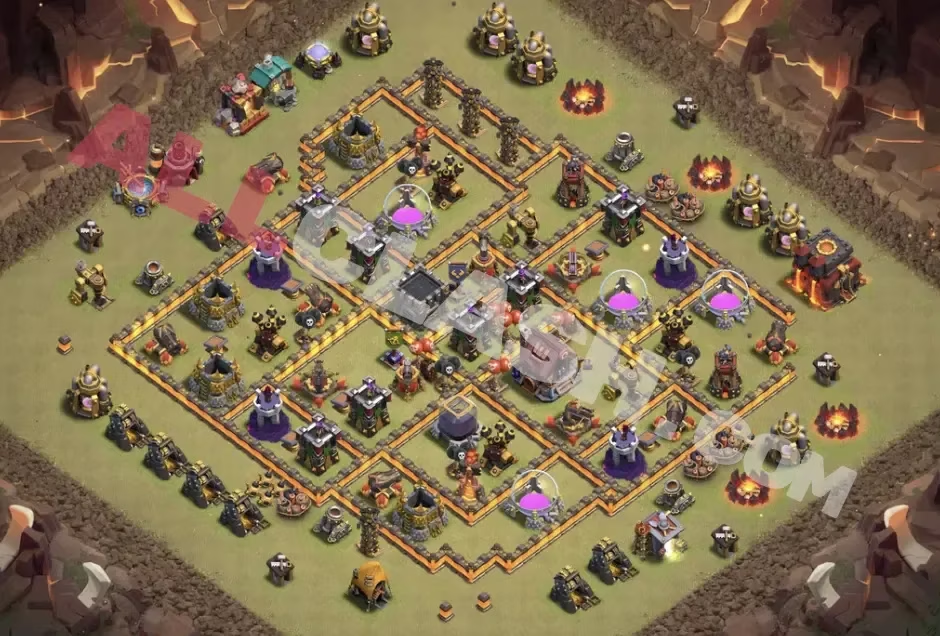
A well-built war base in 2026 also minimizes Giant Arrow value at the corners. If the Archer Queen can line up a shot that removes an Air Defense or a key splash defense before the main attack begins, the defender is already in trouble. Strong layouts use trash buildings and spacing to make those angles awkward. The same logic applies to Zap chains: if two Air Defenses sit too close together, a Lightning spell sequence can erase both and open the base for Dragons.
Another common feature is a Geared Archer Tower or a similarly durable point defense near the core. It adds coverage without creating a single obvious target for the attacker. When combined with carefully placed Giant Bombs and splash defenses on the flanks, this setup can turn a confident Smash attack into a low two-star.
Trophy and Ranked Bases: Consistency Under Pressure
Trophy and ranked layouts face a wider range of attack styles because opponents are often experimenting or pushing for percentage. A good TH10 ranked base therefore needs consistency rather than a single hard counter. Ring-style layouts and fully asymmetrical designs both appear in the current meta, but they succeed for the same reasons: they disrupt troop pathing, protect key defenses from predictable spell value, and create high-damage zones that attackers cannot easily avoid.
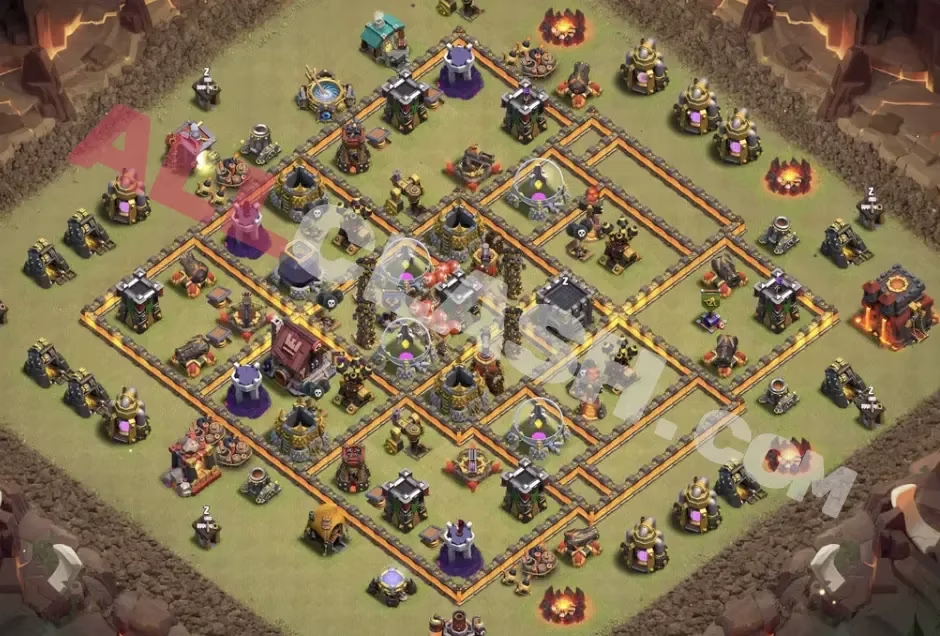
Should a trophy base be copied from a screenshot alone? Usually not. The placement of traps, the Clan Castle radius, and the exact spacing between compartments matter far more than the general outline. A layout that looks strong in a thumbnail may have a fatal Giant Arrow angle or a Wall Wrecker path that opens the core too quickly. That is why experienced builders test bases against common entries before recommending them.
Why Base Freshness Matters More Than Ever
In 2026, base freshness is a real defensive stat. A layout that is widely public becomes easier to prepare for, and opponents in war or ranked will often recognize it. Designers who release new TH10 bases at the start of each season tend to keep the strongest versions limited for a period, which is why the newest layouts usually outperform older ones. Is a base that was elite three months ago still worth copying today? Often, no. Balance changes, new attack strategies, and simple familiarity can erode its effectiveness.
Signs that a TH10 base is becoming outdated include:
-
The layout has been public for several months and appears in many videos.
-
Air Defenses can be removed by a single Zap chain or a clean Giant Arrow.
-
A Wall Wrecker can open both multi-target Inferno compartments.
-
Witch attacks reach the core without passing through meaningful splash damage.
-
The Clan Castle is easy to lure or sits outside the main defensive coverage.
Core Principles for Any TH10 Layout
| Principle | Why It Matters |
|---|---|
| Centralized Clan Castle | Defensive troops arrive where the main push must commit. |
| Protected Air Defenses | Reduces the value of Lightning spells and Giant Arrow. |
| Separated Inferno Towers | Prevents one Wall Wrecker from opening both compartments. |
| Splash on the flanks | Counters Witches and spread-out ground attacks. |
| Trash ring and spacing | Denies easy percentage and awkward Giant Arrow angles. |
| Unpredictable trap placement | Turns routine attacks into low-percentage results. |
⚔️ War bases should prioritize anti-3-star denial, while 🏆 trophy bases should prioritize consistent percentage defense. 🛡️ Both types benefit from testing against the attacks that are actually popular in the current meta, not the attacks that were popular a year ago.
Final Thoughts
Town Hall 10 may be an older level, but its base design meta is still alive in 2026. The best layouts are not the ones with the most impressive screenshots; they are the ones that account for siege machines, Giant Arrow, air variations, Witches, and Smash attacks in a single coherent design. Players who want reliable defense should look for recently tested bases, avoid layouts that have been public for too long, and pay attention to the small structural details that decide whether an attacker gets a triple or settles for two stars. After all, what is the point of copying a base if the opponent already knows exactly how to beat it?
This discussion is informed by Rock Paper Shotgun, whose long-form reporting on strategy and live-service games helps explain why even older titles like Clash of Clans remain meta-driven. In the context of TH10 base building, that perspective reinforces a simple lesson: defensive success comes less from copying a popular screenshot and more from understanding how current attack patterns exploit spacing, pathing, and overexposed core value.